How Many Cups in a Liter? Your 2026 Conversion Guide
Ever found yourself staring at a recipe or a measurement and wondering, “how many cups in a liter?” You’re not alone! This common kitchen puzzle pops up more often than you might think, especially when bridging the gap between metric and imperial systems. Let’s clear it up. (Source: National Institute of Standards and Technology – NIST)
In my years of experimenting in the kitchen, from perfecting delicate pastries to scaling up family recipes, I’ve learned that accurate measurements are absolutely key. Misunderstanding a simple conversion can turn a culinary triumph into a bit of a mess. So, let’s dive deep into the world of liters and cups, ensuring your cooking and baking are precise, no matter the origin of the recipe.
This isn’t just about answering a quick question; it’s about giving you the confidence to tackle any recipe, whether it’s written in milliliters or cups. We’ll break down the exact numbers, explore why there might be slight variations, and offer practical tips for making these conversions easy in your own cooking adventures.
Contents
- How Many Cups in a Liter, Exactly?
- Understanding the Difference Between Cups
- Converting Liters to Cups in the Kitchen
- Practical Tips for Liter to Cup Conversions
- Common Mistakes When Measuring Liters and Cups
- When Does This Conversion Matter Most?
- Your Quick Reference Guide
- Frequently Asked Questions About Cups in a Liter
How Many Cups in a Liter, Exactly?
Let’s get straight to the point. The most common and widely accepted answer to “how many cups in a liter” depends on which ‘cup’ you’re referring to. In the United States, a standard liquid cup is defined as 236.59 milliliters. A liter, as you likely know, is 1000 milliliters.
So, if we’re using the standard US cup:
1000 milliliters (1 liter) / 236.59 milliliters per cup = approximately 4.227 cups.
This is the figure you’ll encounter most often in North American recipes and contexts. However, things can get a little tricky because other parts of the world use different definitions for a ‘cup’.
There are approximately 4.23 US customary cups in one liter. This conversion is vital for bakers and cooks who work with both metric and imperial measurements, ensuring recipe accuracy. A liter equals 1000 milliliters, and a US cup is defined as 236.59 milliliters, leading to this common conversion factor.
Understanding the Difference Between Cups
This is where the confusion often starts. While the US liquid cup is 236.59 ml, other ‘cups’ exist:
- Metric Cup: Found in Australia, New Zealand, Canada, and other countries adopting metric standards, the metric cup is a simpler 250 milliliters. This is a rounded, easier number to work with.
- Imperial Cup: Less common now, but historically, the British Imperial cup was around 284 milliliters. You’re unlikely to encounter this in modern recipes unless dealing with very old texts.
- Japanese Cup: This is a smaller 200 milliliters.
When someone asks “how many cups in a liter,” they are almost always thinking of the US cup (4.23 cups) or the metric cup (4 cups). The metric cup makes for a very clean conversion: 1 liter = 4 metric cups. This simplicity is one reason the metric system is favored in many scientific and culinary circles globally.
For the purpose of most cooking and baking in the United States, always assume a ‘cup’ means the US customary cup of 236.59 ml. If you’re using a recipe from Australia or New Zealand, be aware they might be using the 250 ml metric cup, which means 1 liter is exactly 4 cups for them.
Important: Always check the origin of your recipe. If it’s from the US, use 4.23 cups/liter. If it’s from Australia or New Zealand, it’s likely 4 cups/liter. This small difference can significantly impact the outcome of your cooking or baking, especially in delicate recipes like custards or cakes.
Converting Liters to Cups in the Kitchen
So, you’ve got a recipe that calls for liters, but your measuring tools are all in cups. Or perhaps you’ve bought a large bottle of liquid in liters and need to portion it into cups. Here’s how to handle it:
The Basic Formulas:
- Number of Cups = Number of Liters × 4.227 (for US cups)
- Number of Cups = Number of Liters × 4 (for metric cups)
Let’s look at some examples:
- Example 1 (US Cups): You need 2 liters of milk for a large batch of sauce. How many US cups is that? 2 liters × 4.227 cups/liter = 8.454 cups. So, you’d need just over 8 and a half US cups.
- Example 2 (Metric Cups): A recipe calls for 1.5 liters of water. If you’re using metric cups (250ml), how many do you need? 1.5 liters × 4 cups/liter = 6 metric cups.
It’s also helpful to know the reverse: how many liters are in a cup.
- 1 US cup = 0.23659 liters (or about 1/4 of a liter)
- 1 Metric cup = 0.25 liters (exactly 1/4 of a liter)
This makes it easy to think: a standard US cup is a little less than a quarter of a liter, while a metric cup is exactly a quarter of a liter.
Practical Tips for Liter to Cup Conversions
Beyond the numbers, making these conversions work in real life is about having the right tools and a bit of know-how. I always keep a conversion chart handy in my kitchen, sometimes even taped inside a cabinet door, for those moments I’m in a rush.
Using Measuring Cups: If you have standard US measuring cups, you’ll need to do the math. For instance, to measure 2 liters (which is about 8.45 US cups), you could fill your 1-cup measure 8 times, and then add a bit more from a 1/2 cup measure, or just eyeball it slightly past the 4-cup mark if precision isn’t paramount.
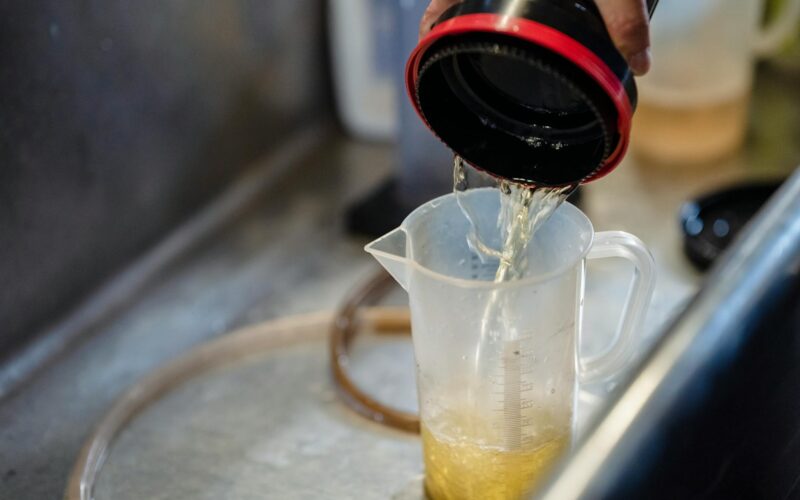
Using Liquid Measuring Jugs: These are your best friends for this kind of conversion. Most liquid measuring jugs in the US have both metric (ml/liters) and US customary (cups/fl oz) markings. You can simply pour 1 liter of liquid and read off the corresponding cup measurement on the jug itself, eliminating the need for complex calculations.
Embrace Digital Tools: In 2026, smartphone apps and online conversion calculators are more accessible than ever. Keep a reliable conversion app on your phone for instant answers while you’re cooking. Many modern kitchen appliances also have built-in conversion features.
Common Mistakes When Measuring Liters and Cups
The most frequent error is assuming all ‘cups’ are the same. As we’ve seen, a US cup is different from a metric cup. Failing to account for this can lead to recipes that are too dense, too wet, or simply not quite right. Another mistake is using dry measuring cups for liquids, which can be less accurate due to their brimless design.
Be mindful of measurement precision. While rounding is fine for some applications, baking often requires exactitude. For example, if a recipe calls for 1 liter of liquid and you’re using US cups, approximating 4 cups instead of 4.23 cups will result in a significant under-measurement, potentially affecting the texture and consistency of your final dish.
When Does This Conversion Matter Most?
This conversion is particularly important in baking, where the ratio of wet to dry ingredients is critical. Think about making cakes, cookies, custards, or breads. A slight overage or shortage of liquid can dramatically alter the outcome. It also matters when:
- Following recipes from different countries.
- Purchasing ingredients in bulk using metric measurements (like large bottles of oil or water) and needing to use them in cup-based recipes.
- Working with children or new cooks who may be more familiar with one system than the other.
Accurate conversion ensures consistency and success, whether you’re a seasoned chef or just starting out.
Your Quick Reference Guide
Here’s a simple breakdown for quick reference:
- 1 Liter ≈ 4.23 US Cups
- 1 Liter = 4 Metric Cups (250 ml each)
- 1 US Cup ≈ 0.237 Liters
- 1 Metric Cup = 0.25 Liters
Keep this handy for those moments you need a quick conversion without reaching for your phone or a chart.
Frequently Asked Questions About Cups in a Liter
Q1: Is there a universal standard for ‘cup’ measurement?
No, there isn’t a single universal standard. The most common are the US customary cup (236.59 ml) and the metric cup (250 ml). Always check the context or origin of your recipe.
Q2: If a recipe just says ‘cup’, which one should I use?
If the recipe is from the United States or North America, assume it means the US customary cup (4.23 cups per liter). If it’s from Australia, New Zealand, or other metric-leaning countries, it’s likely the metric cup (4 cups per liter).
Q3: How can I easily measure 4.23 cups for 1 liter?
This is where liquid measuring jugs with both US and metric markings are invaluable. If you don’t have one, you can approximate by filling a standard 4-cup measure and then adding a little more (about 1/4 cup) for US cups. For metric cups, it’s a perfect 4 cups.
Q4: Does the type of liquid matter for cup-to-liter conversions?
For volume measurements like cups and liters, the type of liquid (water, milk, oil) generally does not affect the conversion itself, as these are measures of volume, not weight. However, always use appropriate liquid measuring cups for accuracy.