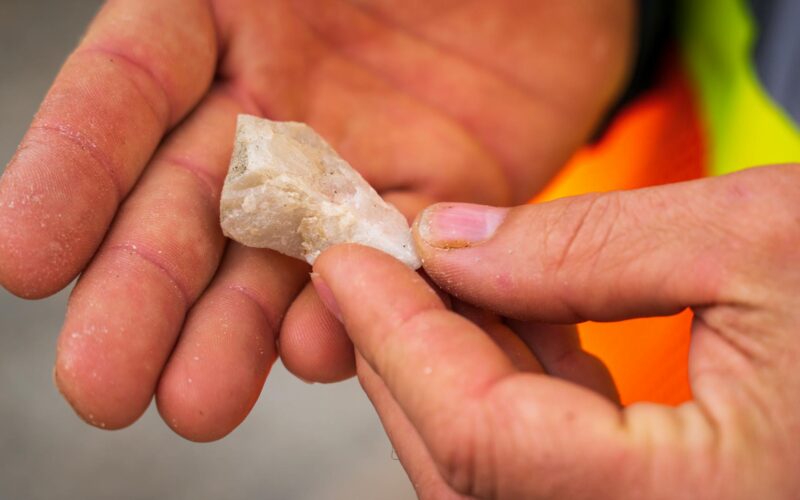
So, you’re curious about the ‘jr geo’ path? It’s a fantastic starting point for anyone passionate about understanding our planet. Think of a Jr Geo, or Junior Geologist, as an essential member of a geoscience team, eager to learn and contribute. They’re the ones who often get their hands dirty, collecting data, assisting senior geologists, and building the foundational knowledge that leads to a rewarding career.
This role is more than just a job title; it’s a stepping stone. It’s where you’ll translate academic learning into real-world application, whether that’s in environmental consulting, mining, oil and gas, or even government agencies. The demand for knowledgeable geoscientists is constant, and a Jr Geo position is your prime opportunity to prove your mettle and grow.
The primary question many aspiring geologists ask is, ‘What exactly does a Jr Geo do day-to-day?’ The answer is varied and depends heavily on the industry and specific company, but it generally involves supporting senior geologists in their projects. This can range from assisting with field sampling and data collection to helping analyze geological information and prepare reports. It’s a role that offers immense learning potential and exposure to diverse geological challenges.
Table of Contents
- What is a Jr Geo?
- Key Responsibilities of a Jr Geo
- Essential Skills for Jr Geos
- Navigating Your First Geo Projects
- Common Mistakes for New Jr Geos
- Career Progression for Jr Geologists
- Frequently Asked Questions
- Final Thoughts on Your Jr Geo Journey
What is a Jr Geo?
A Jr Geo is an entry-level professional in the field of geoscience. They typically hold a bachelor’s degree in geology, earth science, or a related field. This role is designed for individuals who are new to the professional geoscience world and are looking to gain practical experience under the guidance of more experienced geologists. They are the future leaders and experts, building their expertise from the ground up.
Think of them as geological apprentices. They assist in a variety of tasks that contribute to larger geological investigations. This could involve anything from logging core samples from a drilling operation to helping conduct environmental site assessments. The core function is to support the senior team, learn best practices, and develop a hands-on understanding of geological principles.
The goal of a Jr Geo position is multifaceted: to provide valuable support to projects, to offer a learning environment for the junior professional, and to assess the candidate’s potential for long-term growth within the company or the industry. It’s a crucial phase where theoretical knowledge meets practical application, and where a passion for the earth sciences can truly take root.
Key Responsibilities of a Jr Geo
The daily tasks of a Jr Geo can vary significantly. One common responsibility is field data collection. This might involve mapping geological formations, collecting soil and rock samples, measuring groundwater levels, or performing basic environmental monitoring. Accuracy and meticulous record-keeping are paramount here, as this data forms the basis for all subsequent analysis.
Another significant part of the role involves laboratory work. This can include preparing samples for analysis, performing preliminary tests, and assisting with the interpretation of results. Understanding how to properly handle and prepare samples is critical for ensuring the integrity of the scientific data. You might be working with microscopes, chemical testing kits, or other analytical equipment.
Jr Geos are also frequently involved in report preparation. This usually means assisting senior geologists by compiling data, creating charts and graphs, drafting sections of reports, and ensuring all documentation is organized. Learning to communicate complex geological findings clearly and concisely is a skill that develops over time but starts with these foundational tasks.
Furthermore, depending on the sector, a Jr Geo might be involved in aspects of geotechnical investigations, helping to assess soil and rock properties for construction projects, or assisting in the exploration for natural resources. They might also be tasked with basic literature reviews or database searches to gather background information for projects.
Essential Skills for Jr Geos
Beyond a solid academic background in geoscience, several skills are vital for a Jr Geo. Firstly, strong analytical and problem-solving abilities are non-negotiable. You’ll be presented with geological puzzles, and your ability to break them down, analyze the data, and propose logical solutions will set you apart.
Technical proficiency is also key. This includes familiarity with geological software, such as GIS (Geographic Information Systems) for mapping and spatial analysis, and potentially some CAD (Computer-Aided Design) software. Basic understanding of data analysis tools like Excel is also essential. For example, in my first year, I had to quickly learn how to use ArcGIS for basic map creation, which was invaluable.
Field skills are crucial for many Jr Geo roles. This encompasses basic navigation, sample collection techniques, and an understanding of safety protocols in various environments. Being comfortable working outdoors, sometimes in challenging conditions, is a significant advantage. You must be able to identify common rock types and geological structures, even at an introductory level.
Finally, communication skills, both written and verbal, are incredibly important. You’ll need to clearly articulate your findings to colleagues and supervisors. This includes the ability to write technical notes, contribute to reports, and present information effectively. Being a good listener is just as vital as being a good communicator.
Navigating Your First Geo Projects
Starting on your first major project as a Jr Geo can feel overwhelming. The best approach is to break down the project into manageable tasks. Understand the overall objective of the project and how your specific assignments contribute to it. Don’t hesitate to ask for clarification if an objective isn’t clear.
Active participation is key. When you’re in the field, pay attention to everything around you – the rock formations, the soil types, the landscape. Even if you don’t fully understand it yet, observing and taking detailed notes will help solidify your learning. In the office, engage with the data analysis process. Ask your colleagues about the methods they’re using and why.
Time management is another critical skill to develop early on. Projects often have tight deadlines, so learning to prioritize tasks, estimate the time needed for each, and work efficiently will be essential. Avoid procrastination; tackle the most challenging tasks when you have the most energy.
A counterintuitive insight many new professionals miss is the importance of understanding the ‘why’ behind the ‘what’. Don’t just collect data because you’re told to; try to understand why that specific data is needed and what it will reveal about the geology. This deeper understanding makes your work more meaningful and valuable.
Common Mistakes for New Jr Geos
One of the most common mistakes new Jr Geos make is being afraid to ask questions. They might feel embarrassed about not knowing something, but this hesitation can lead to errors or misunderstandings that are far more detrimental than asking for clarification. It’s better to ask a ‘silly’ question early on than to make a significant mistake later.
Another frequent error is poor documentation. In fieldwork, this can mean not recording sample locations accurately, forgetting to note crucial observations, or not labeling samples properly. In the office, it might be failing to keep clear records of data analysis steps. This lack of detail can render data useless or require costly re-work.
Overconfidence is also a pitfall. While enthusiasm is great, believing you know more than you do can lead to overlooking important details or dismissing advice from experienced professionals. Humility and a willingness to learn from those with more experience are vital.
Finally, neglecting safety protocols is a dangerous mistake. Whether in the field or the lab, always adhere to established safety procedures. Your well-being is paramount, and accidents can have severe consequences. Always wear the appropriate personal protective equipment (PPE) and follow site-specific safety plans.
Career Progression for Jr Geologists
The journey from Jr Geo to a seasoned professional is a path of continuous learning and increasing responsibility. After gaining a few years of experience and demonstrating competence, Jr Geos typically advance to roles like Geologist, Senior Geologist, or Project Geologist. These roles involve more independent work, project management, and mentorship of junior staff.
For those interested in specialization, further education or certifications can open doors. Many geologists pursue Master’s or Ph.D. degrees to become experts in specific fields like geophysics, hydrogeology, or petroleum geology. Professional Geologist (PG) licensure, where applicable, is another significant milestone that signifies a high level of expertise and ethical practice.
The geoscience field offers diverse career paths. You could move into management, research and development, academia, or even pivot into related fields like environmental science or resource management. The skills developed as a Jr Geo are transferable and valuable across many sectors. For instance, according to the U.S. Bureau of Labor Statistics, employment of geoscientists is projected to grow 5 percent from 2022 to 2032, which is about as fast as the average for all occupations.
Employment of geoscientists is projected to grow 5 percent from 2022 to 2032, about as fast as the average for all occupations. (Source: U.S. Bureau of Labor Statistics)
The key to career progression is consistent professional development, networking, and seeking out challenging opportunities that stretch your abilities. Attending industry conferences and joining professional organizations like the American Association of Petroleum Geologists (AAPG) or the Geological Society of America (GSA) can provide valuable networking and learning opportunities.
Frequently Asked Questions
What is the typical salary range for a Jr Geo?
The salary for a Jr Geo can vary widely based on location, industry, and experience. Entry-level positions typically range from $50,000 to $70,000 annually in the United States. Specialized industries or high cost-of-living areas might offer higher starting salaries.
What kind of degree is required for a Jr Geo position?
A bachelor’s degree in Geology, Earth Science, or a closely related geoscience field is generally required. Some positions might prefer or require a Master’s degree, especially for more specialized roles or research-focused opportunities.
Is fieldwork always required for a Jr Geo?
Fieldwork is common but not universal for all Jr Geo roles. Environmental consulting and mining often involve significant fieldwork, while roles in pure research or data analysis might be office-based. It’s essential to check the job description for specific requirements.
What are the biggest challenges for a Jr Geo?
Challenges often include adapting to demanding fieldwork conditions, mastering complex geological software, managing time effectively under project deadlines, and continuously learning new techniques and scientific concepts to stay relevant in the field.
How can a Jr Geo stand out to employers?
Standing out involves demonstrating strong technical skills, showing initiative by asking thoughtful questions, gaining relevant internship experience, developing good communication abilities, and showing a genuine passion for geoscience and a commitment to lifelong learning.
Final Thoughts on Your Jr Geo Journey
Embarking on your career as a Jr Geo is an exciting and pivotal moment. It’s a role that demands curiosity, diligence, and a genuine passion for the Earth sciences. By focusing on developing essential skills, embracing learning opportunities, and avoiding common pitfalls, you can build a strong foundation for a successful and impactful career in geoscience.
Remember that every experienced geologist started somewhere, often in a role very similar to yours. The knowledge you gain, the problems you solve, and the relationships you build during these early years will shape your professional trajectory. So, dive in, ask questions, be thorough, and enjoy the process of discovering and understanding our planet.
Your journey as a Jr Geo is just the beginning. With dedication and continuous learning, you’ll contribute meaningfully to understanding and managing the Earth’s resources and environment for years to come.